Buy iptvshop.co.uk ?
We are moving the project
iptvshop.co.uk .
Are you interested in purchasing the domain
iptvshop.co.uk ?
domain@kv-gmbh.de · 0541-91531010
Buy iptvshop.co.uk ?
Are photons electrons?
No, photons are not electrons. Photons are elementary particles that make up light and electromagnetic radiation, while electrons are negatively charged subatomic particles that are part of atoms. Photons have no mass and travel at the speed of light, while electrons have mass and are bound to the nucleus of an atom. **
How are photons created?
Photons are created through a process called electromagnetic radiation. This occurs when an atom absorbs energy, causing its electrons to move to a higher energy level. When the electrons return to their original energy level, they release the absorbed energy in the form of photons. This process can happen in various ways, such as through thermal radiation, chemical reactions, or nuclear reactions. **


Similar search terms for Photons
Top-Angebote
Products related to Photons:
-
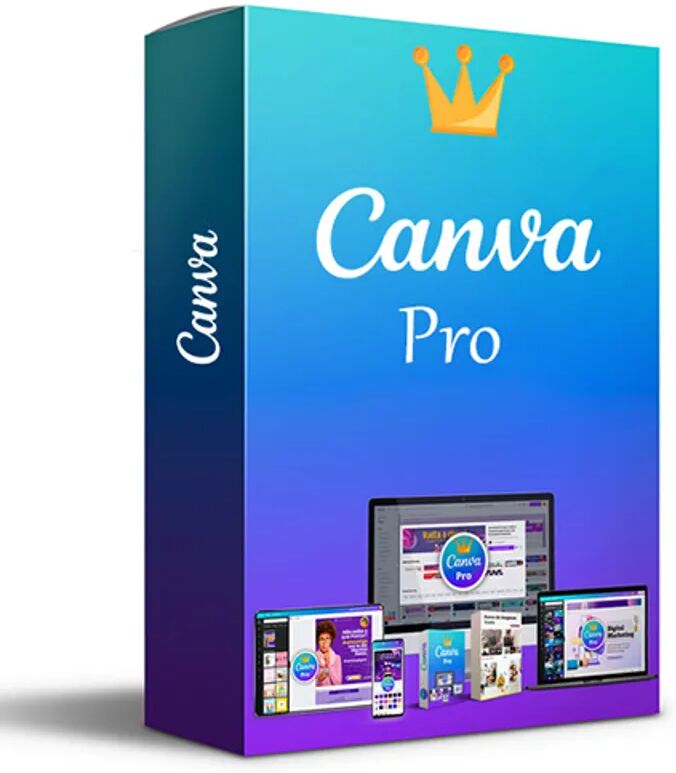
Canva Pro Education - 1 year SubscriptionWhen you make a purchase, you will receive an e-mail to subscribe to Canva Education , which will give you access to all the professional features of Canva Pro + 1800 free neutral Instagram post templates Please note: Brand Kite and Canva AI are not included How to Copy a Project from Your Personal Canva Account to a Canva Pro Class Account Discover the power of professional design with our annual subscription to Canva Pro. With Canva Pro, you'll have access to a wide range of premium tools and resources that will allow you to create stunning visual content for your business, personal projects, and more. Here's what you can expect with a year of Canva Pro: Unlimited access to over 100 million premium resources: Images, video, audio, graphics, and more, all ready to be used in your projects. Customisable templates: Thousands of high-quality templates for every need, from presentations to social media posts, from flyers to business cards. Advanced design tools: Features such as one-click background removal, the creation of customised brand kits, and the ability to resize your designs with a single click. Real-time collaboration: Work together with your team, leaving comments and suggestions directly in the projects, for seamless collaboration. Direct publication on social media: Schedule and publish your content directly from Canva on all major social platforms. Unlimited cloud storage: Save and organise all your projects in one place, with unlimited space. Don't miss the opportunity to take your design to the next level. With Canva Pro, the possibilities are endless. Subscribe now and start creating like a pro! How come the licence is priced so low? We offer retail licences that are used and discontinued by the previous owner since the EC ruling C-128/2011. That is why you can purchase the official licence on our site at a cheaper price. This is a product in STUDENT Version.6,87 £*Shipping: 0,00 £Secure redirect to the provider
-
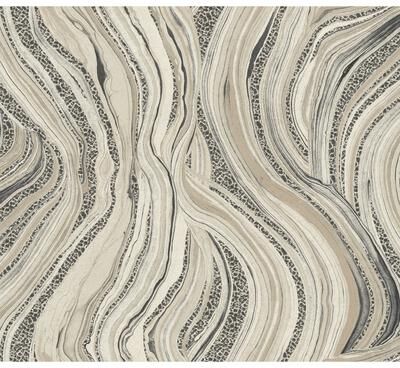
Ronald Redding Streaming Cheetah Linen WallpaperMarble veining and animal skin combine to compose a stream of color and print in pattern Streaming Cheetah. This Streaming Cheetah Wallpaper measures approximately 27 inches wide by 27 feet long, covering About 60.8 square feet per roll.170,00 $*Shipping: 0,00 $Secure redirect to the provider
-
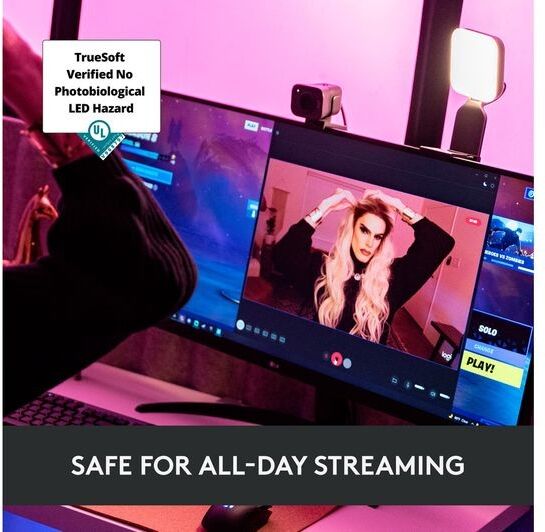
Logitech Litra Glow Streaming Light BlackStreaming light delivering 250 lumens with adjustable color temperature from 2700K to 6500K for natural, flattering lighting. TrueSoft technology diffuses light evenly to enhance skin tone during streaming and video calls. USB-powered with software control via Logitech G HUB; includes adjustable monitor mount for height, tilt, and rotation customization. Compatible with Windows 10+ and macOS 10.14+.82,49 £*Shipping: 0,00 £Secure redirect to the provider
-
What happens to photons?
Photons are elementary particles that make up light. They do not have mass and travel at the speed of light. When photons interact with matter, they can be absorbed, reflected, or transmitted. Absorption of photons can result in the excitation of electrons, leading to various physical and chemical processes. **
-
How can one convert the energy of different photons into monochromatic photons?
One way to convert the energy of different photons into monochromatic photons is through a process called frequency doubling or second harmonic generation. This involves passing the photons through a nonlinear crystal, which causes the photons to combine and create new photons with double the frequency and half the wavelength of the original photons. This results in monochromatic photons with a single, specific wavelength. Another method is through the use of filters or monochromators, which can selectively filter out photons of specific wavelengths, allowing only monochromatic photons to pass through. **
-
How can photons have mass?
Photons are massless particles according to the Standard Model of particle physics. They travel at the speed of light and have zero rest mass. However, in certain theoretical models beyond the Standard Model, such as some versions of string theory, it is possible for photons to acquire a small amount of mass through interactions with other particles or fields. This mass is typically very small and has not been experimentally observed. **
-
How far do photons travel?
Photons, as particles of light, travel at the speed of light in a vacuum, which is approximately 299,792 kilometers per second. This means that photons can travel vast distances in a very short amount of time. However, their travel distance can be affected by factors such as absorption, reflection, and scattering, which can cause them to be absorbed or redirected before reaching their destination. **


What distinguishes photons and protons?
Photons are elementary particles that carry electromagnetic radiation, such as light, while protons are subatomic particles found in the nucleus of an atom. Photons have no mass and travel at the speed of light, while protons have mass and are composed of quarks. Additionally, photons do not have an electric charge, while protons have a positive electric charge. **
Why can photons penetrate matter?
Photons can penetrate matter because they do not have an electric charge and are not affected by electromagnetic forces within the material. Additionally, photons do not have mass, allowing them to travel at the speed of light and pass through matter without being absorbed or deflected. This property of photons enables them to interact with atoms and molecules in the material, leading to phenomena such as absorption, reflection, and transmission. **
Top-Angebote
Products related to Photons:
-
eufy Plus Member Annual subscriptionShipping Service Free Next-Day Shipping (1 item per month) Free Express Shipping (1 item per month) eufyCredits Rewards Earn 1.5 eufyCredits for every $1 spent (Upgraded Benefit) Access to exclusive redemption products Warranty Extra 6-month...135,00 $*Shipping: 0,00 $Secure redirect to the provider
-
eufy Basic Plan-Monthly-Subscriptioneufy Basic Plan Includes: Enjoy a free first month with a flexible subscription that automatically renews unless canceled. You can cancel anytime. If you cancel, your benefits will continue through the end of the current billing period, and you...19,99 $*Shipping: 0,00 $Secure redirect to the provider
-
Canva Pro Education - 1 year SubscriptionWhen you make a purchase, you will receive an e-mail to subscribe to Canva Education , which will give you access to all the professional features of Canva Pro + 1800 free neutral Instagram post templates Please note: Brand Kite and Canva AI are not included How to Copy a Project from Your Personal Canva Account to a Canva Pro Class Account Discover the power of professional design with our annual subscription to Canva Pro. With Canva Pro, you'll have access to a wide range of premium tools and resources that will allow you to create stunning visual content for your business, personal projects, and more. Here's what you can expect with a year of Canva Pro: Unlimited access to over 100 million premium resources: Images, video, audio, graphics, and more, all ready to be used in your projects. Customisable templates: Thousands of high-quality templates for every need, from presentations to social media posts, from flyers to business cards. Advanced design tools: Features such as one-click background removal, the creation of customised brand kits, and the ability to resize your designs with a single click. Real-time collaboration: Work together with your team, leaving comments and suggestions directly in the projects, for seamless collaboration. Direct publication on social media: Schedule and publish your content directly from Canva on all major social platforms. Unlimited cloud storage: Save and organise all your projects in one place, with unlimited space. Don't miss the opportunity to take your design to the next level. With Canva Pro, the possibilities are endless. Subscribe now and start creating like a pro! How come the licence is priced so low? We offer retail licences that are used and discontinued by the previous owner since the EC ruling C-128/2011. That is why you can purchase the official licence on our site at a cheaper price. This is a product in STUDENT Version.6,87 £*Shipping: 0,00 £Secure redirect to the provider
-
Ronald Redding Streaming Cheetah Linen WallpaperMarble veining and animal skin combine to compose a stream of color and print in pattern Streaming Cheetah. This Streaming Cheetah Wallpaper measures approximately 27 inches wide by 27 feet long, covering About 60.8 square feet per roll.170,00 $*Shipping: 0,00 $Secure redirect to the provider
-
Are photons electrons?
No, photons are not electrons. Photons are elementary particles that make up light and electromagnetic radiation, while electrons are negatively charged subatomic particles that are part of atoms. Photons have no mass and travel at the speed of light, while electrons have mass and are bound to the nucleus of an atom. **
-
How are photons created?
Photons are created through a process called electromagnetic radiation. This occurs when an atom absorbs energy, causing its electrons to move to a higher energy level. When the electrons return to their original energy level, they release the absorbed energy in the form of photons. This process can happen in various ways, such as through thermal radiation, chemical reactions, or nuclear reactions. **
-
What happens to photons?
Photons are elementary particles that make up light. They do not have mass and travel at the speed of light. When photons interact with matter, they can be absorbed, reflected, or transmitted. Absorption of photons can result in the excitation of electrons, leading to various physical and chemical processes. **
-
How can one convert the energy of different photons into monochromatic photons?
One way to convert the energy of different photons into monochromatic photons is through a process called frequency doubling or second harmonic generation. This involves passing the photons through a nonlinear crystal, which causes the photons to combine and create new photons with double the frequency and half the wavelength of the original photons. This results in monochromatic photons with a single, specific wavelength. Another method is through the use of filters or monochromators, which can selectively filter out photons of specific wavelengths, allowing only monochromatic photons to pass through. **
Similar search terms for Photons
-
Logitech Litra Glow Streaming Light BlackStreaming light delivering 250 lumens with adjustable color temperature from 2700K to 6500K for natural, flattering lighting. TrueSoft technology diffuses light evenly to enhance skin tone during streaming and video calls. USB-powered with software control via Logitech G HUB; includes adjustable monitor mount for height, tilt, and rotation customization. Compatible with Windows 10+ and macOS 10.14+.82,49 £*Shipping: 0,00 £Secure redirect to the provider
-
Adobe Acrobat Standard DC (Subscription) - 1 MonthAcrobat Standard DC is the subscription version of the Adobe programme, used to convert, crop, edit, sign and manage PDF documents. Acrobat Standard DC includes 100 GB of space on Adobe cloud for your external storage. This version is on subscription (monthly, quarterly or annual) if you are looking for a version without any expiry date, you can find it by purchasing products with a perpetual licence such as Adobe Acrobat Pro 2020 or Adobe Acrobat 2019. What is included in Adobe Acrobat Standard DC? By purchasing a subscription licence for Adobe Acrobat Standard DC you have access to the following features: PDF creation and conversion - allows you to convert Word, Excel, Powerpoint and image files into PDF files Export to other formats - to convert your PDFs into any format Direct editing - to intervene directly on files and modify them Electronic signature - to apply your digital signature and guarantee the authenticity of documents Cloud storage space - 100 GB of storage on Adobe cloud Additionally, you also have access to the installation guide provided with the Adobe Acrobat Standard DC subscription, sent via e-mail immediately after your purchase. Adobe Acrobat Standard DC: differences with other versions Adobe Standard DC includes all basic PDF functionality, these include: editing and organising PDF files; converting documents to and from PDF; form completion, document signing and requesting electronic signatures; protecting files via password. Compared to the Pro DC version of Adobe software, it lacks the OCR tool, redaction, generative AI implementation and advanced features that you can instead find in the more expensive subscription. Compared instead to the perpetual licence edition, namely Acrobat Pro 2020 and earlier versions, it boasts continuous updates to keep the software always at the latest version, as well as compatibility with macOS. Adobe Acrobat: which one to choose in brief? The Acrobat software is available in three different formats: two of these are on subscription, such as Acrobat Standard DC, whilst one has a perpetual licence. Below are the characteristics of each of them. Feature Acrobat Standard DC Acrobat Pro DC Acrobat Pro 2020 Licence type Subscription (monthly, quarterly, annual) Subscription (monthly, quarterly, annual) Perpetual (one-time) Operating systems Windows, macOS Windows, macOS Windows Devices 1 2 (not for concurrent use) 1 Cloud Storage 100 GB 100 GB — Advanced features — (editing, conversion, digital signature) ✓ (OCR, redaction, preflight, batch + generative AI) ✓ (OCR, redaction, preflight, batch) Updates ✓ Continuous ✓ Continuous — The choice depends on your usage needs. If you need to use Acrobat for collaborative and work purposes, then you can consider purchasing Acrobat Standard DC or Acrobat Pro DC, both versions guarantee 100 GB of cloud storage and all the most useful features for managing and editing PDFs. In the event that you need desktop software, with no expiry date and without the...10,90 £*Shipping: 0,00 £Secure redirect to the provider
-
Ronald Redding Streaming Cheetah Grey WallpaperMarble veining and animal skin combine to compose a stream of color and print in pattern Streaming Cheetah. This Streaming Cheetah Wallpaper measures approximately 27 inches wide by 27 feet long, covering About 60.8 square feet per roll.170,00 $*Shipping: 0,00 $Secure redirect to the provider
-
How can photons have mass?
Photons are massless particles according to the Standard Model of particle physics. They travel at the speed of light and have zero rest mass. However, in certain theoretical models beyond the Standard Model, such as some versions of string theory, it is possible for photons to acquire a small amount of mass through interactions with other particles or fields. This mass is typically very small and has not been experimentally observed. **
-
How far do photons travel?
Photons, as particles of light, travel at the speed of light in a vacuum, which is approximately 299,792 kilometers per second. This means that photons can travel vast distances in a very short amount of time. However, their travel distance can be affected by factors such as absorption, reflection, and scattering, which can cause them to be absorbed or redirected before reaching their destination. **
-
What distinguishes photons and protons?
Photons are elementary particles that carry electromagnetic radiation, such as light, while protons are subatomic particles found in the nucleus of an atom. Photons have no mass and travel at the speed of light, while protons have mass and are composed of quarks. Additionally, photons do not have an electric charge, while protons have a positive electric charge. **
-
Why can photons penetrate matter?
Photons can penetrate matter because they do not have an electric charge and are not affected by electromagnetic forces within the material. Additionally, photons do not have mass, allowing them to travel at the speed of light and pass through matter without being absorbed or deflected. This property of photons enables them to interact with atoms and molecules in the material, leading to phenomena such as absorption, reflection, and transmission. **
* All prices are inclusive of VAT and, if applicable, plus shipping costs. The offer information is based on the details provided by the respective shop and is updated through automated processes. Real-time updates do not occur, so deviations can occur in individual cases. ** Note: Parts of this content were created by AI.